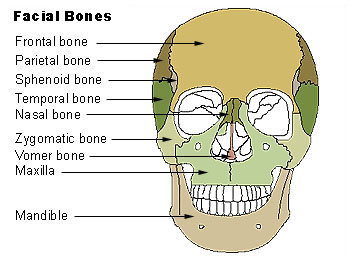
The Vomer: An Unsung Hero of the Midfacial Skeleton
Often overlooked amidst the intricate landscape of the human skull, the vomer bone plays an indispensable role in defining our facial structure, facilitating respiration, and maintaining skeletal integrity. Derived from the Latin word for 'ploughshare,' a name that aptly describes its characteristic shape, the vomer is a thin, unpaired facial bone nestled deep within the nasal cavity. Far from being a mere divider, this crucial structure acts as a central pillar, anchoring an array of other facial and cranial bones to create a stable and functional midface. Understanding the vomer means appreciating the subtle yet profound interplay of form and function that underpins our anatomy.
Anatomical Blueprint: Unpacking the Vomer's Unique Structure
Situated precisely along the midsagittal line, the vomer is distinguished by its unique morphology, which allows it to seamlessly integrate into the complex architecture of the nasal and oral cavities. While often described as quadrilateral, its shape can also be seen as somewhat trapezoidal or even triangular from certain perspectives, particularly when viewed posteriorly. This thin bone is the primary component of the inferior portion of the nasal septum, working in concert with the perpendicular plate of the ethmoid bone, which forms the superior part, and the anterior septal cartilage to create a complete partition.
Upon closer inspection, the vomer presents two distinct surfaces, each subtly marked with small furrows. These indentations serve as pathways for delicate blood vessels, ensuring the bone's vitality. Crucially, each surface also features the vomerine groove, also known as the nasopalatine groove or Scarpa's sulcus. This oblique channel, running downward and forward, provides a protective lodging for the nasopalatine nerve (Scarpa's nerve) and its accompanying vessels. These nerves are vital for relaying sensory information from the nasal cavity to the brain, contributing to our sense of smell and nasal comfort.
The vomer's four borders are equally specialized, each designed for specific articulations:
- Superior Border: This is the thickest edge, notable for a deep furrow flanked by horizontal bone expansions known as the wings of vomer (alae). This furrow acts as a socket, firmly receiving the rostrum of the sphenoid bone. Furthermore, the margins of these alae articulate with the vaginal processes of the medial pterygoid plates of the sphenoid posteriorly, and with the sphenoidal processes of the palatine bones anteriorly. This intricate connection highlights the vomer's central role in binding the sphenoid and palatine bones.
- Inferior Border: Running along the floor of the nasal cavity, this border articulates robustly with the crest formed by the maxillary and palatine bones. This connection grounds the nasal septum, providing a stable base.
- Anterior Border: As the longest of the four, this border slopes downward and forward. Its upper half creates a sturdy union with the perpendicular plate of the ethmoid bone, solidifying the bony nasal septum. The lower half, however, is grooved, perfectly designed to receive the inferior margin of the septal cartilage of the nose. This cartilaginous segment completes the anterior nasal septum, offering both support and flexibility.
- Posterior Border: Uniquely, this border is entirely free of bony or muscular attachments. It is concave in shape and plays a critical role in separating the two posterior nasal apertures, known as the choanae, which connect the nasal cavity to the nasopharynx. This border is characteristically thick and bifid superiorly, gradually thinning out inferiorly.
Interestingly, while the vomer is generally situated in the median plane, its anterior portion frequently exhibits a slight bend or deviation to one side. This common anatomical variation can sometimes contribute to a deviated nasal septum, though other factors are often involved.
The Vomer's Network: Articulations and Midfacial Integrity
The strength and stability of the midfacial skeleton are profoundly dependent on the vomer's extensive network of articulations. Despite its relatively small size, it serves as a central hub, connecting an impressive total of six bones and one cartilage. This makes it a pivotal anchor in the complex tapestry of the human skull, contributing significantly to facial structure and respiratory function. For a deeper dive into these connections, refer to our related article: Vomer Bone: Articulations, Structure, and Nasal Septum Formation.
Specifically, the vomer articulates with:
- Two Cranial Bones:
- The Sphenoid Bone (via its rostrum and vaginal processes)
- The Ethmoid Bone (via its perpendicular plate)
- Four Facial Bones:
- Two Maxillae (upper jaw bones)
- Two Palatine Bones (forming part of the hard palate and nasal cavity)
- One Cartilaginous Structure:
- The Septal Cartilage of the nose
This extensive range of connections underscores the vomer's role as a linchpin, integrating the nasal cavity with the cranial base and the oral cavity. By forming the posterior-inferior border of the nasal septum, the vomer effectively divides the nasal cavity into its left and right halves. This division is not merely structural; it is fundamental for the controlled and efficient flow of air during respiration. A well-formed nasal septum, largely thanks to the vomer, guides airflow, allows for proper humidification and filtration of inhaled air, and contributes to vocal resonance. Anomalies or injuries to the vomer can therefore have significant implications for breathing and overall nasal function.
Adding another layer to its functional significance, the vomeronasal organ, also known as Jacobson's organ, is named for its close proximity to the vomer and nasal bones. While its role in humans is still debated and thought to be vestigial, in many animals it functions as a chemoreceptor organ, detecting pheromones and other chemical signals. Its presence highlights the evolutionary importance of this region and the vomer's integral position within it.
Beyond Structure: Function, Development, and Clinical Relevance
The vomer's contribution extends far beyond its structural articulations. Its overarching function is to provide essential support to the nasal framework, thereby maintaining the critical separation of the nasal passages and aiding in the precise regulation of airflow. This bony partition is vital for optimal respiratory health, as it directs air currents efficiently and evenly through both nostrils. For a more detailed look at how this impacts breathing, see our article: The Vomer Bone: Anatomy, Location, and Role in Nasal Airflow.
Developmental Insights
Developmentally, the vomer emerges as an endochondral bone, meaning it forms from a cartilaginous precursor. During embryogenesis, it arises from the mesenchyme surrounding the nasal capsule. Over time, it undergoes ossification and fuses with adjacent structures, gradually creating a rigid midline partition that is fully integrated by adulthood. This developmental process is complex, and any disruptions can lead to significant craniofacial anomalies.
Clinical Relevance and Practical Considerations
The importance of the vomer is particularly evident in clinical settings. As noted earlier, the anterior portion of the vomer is frequently bent to one side. While minor deviations are common and often asymptomatic, a significant deviation can contribute to a deviated nasal septum. This condition can lead to various issues, including:
- Difficulty breathing through one or both nostrils
- Nasal congestion
- Frequent nosebleeds
- Chronic sinusitis
- Sleep apnea
Though often overshadowed by the septal cartilage as a primary cause, vomerine deviation can necessitate surgical correction, such as septoplasty, to improve airflow and alleviate symptoms. Understanding the precise anatomy of the vomer and its relationship with surrounding structures is paramount for otolaryngologists (ENT specialists) performing such procedures.
Furthermore, rare developmental anomalies like vomer agenesis (absence of the vomer) underscore its critical role. Such conditions can result in severe nasal septum defects, leading to profound respiratory issues and compromising overall craniofacial integrity. In trauma cases affecting the midface, particularly those involving the nasal pyramid, the vomer's condition is a key indicator for assessing structural damage and planning reconstructive surgery.
Practical Insight: For orthodontists and maxillofacial surgeons, knowledge of the vomer's position and integrity is essential when planning procedures that involve the midface, such as orthognathic surgery or the placement of dental implants. Its stability directly impacts the foundational support for the upper jaw and nasal structures, making it a critical anatomical landmark for successful surgical outcomes.
Conclusion
From its humble origins as a 'ploughshare' shaped bone to its complex role in orchestrating midfacial stability, the vomer stands as a testament to the intricate design of the human body. As one of the unpaired facial bones, it anchors a crucial network of articulations, forming the vital inferior part of the nasal septum and contributing fundamentally to our ability to breathe, speak, and even maintain the aesthetic balance of our face. Its structural integrity, developmental precision, and clinical significance highlight that even the most seemingly subtle bones play a colossal role in our overall health and functionality. The vomer, truly, is an unsung hero of the human skeleton.